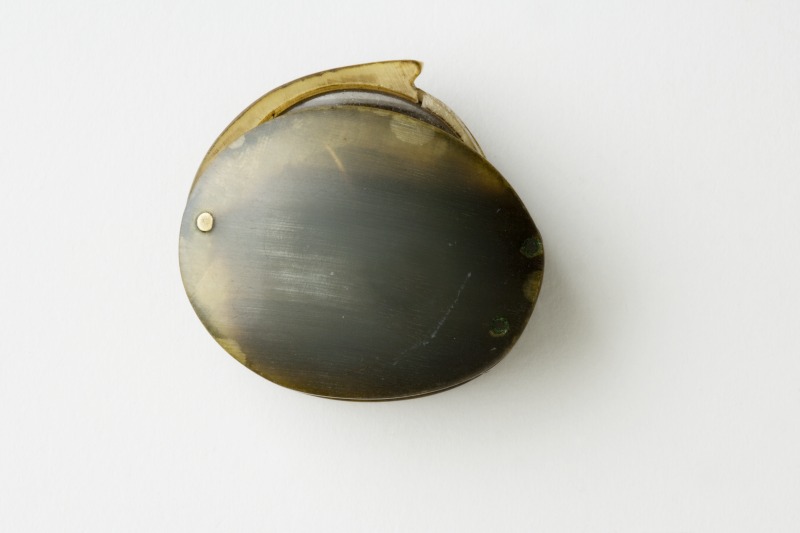
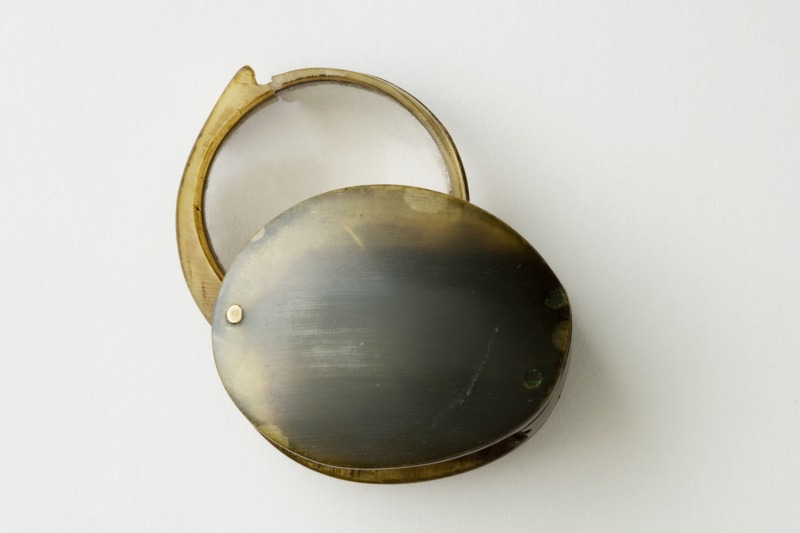
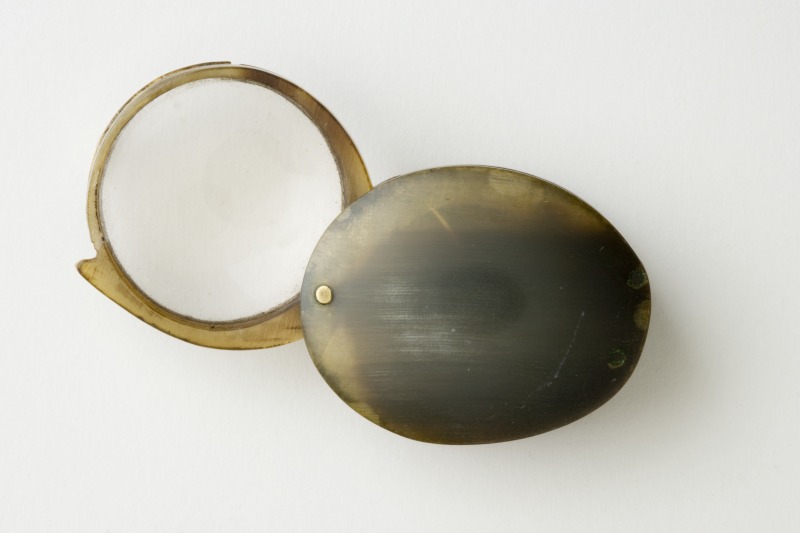
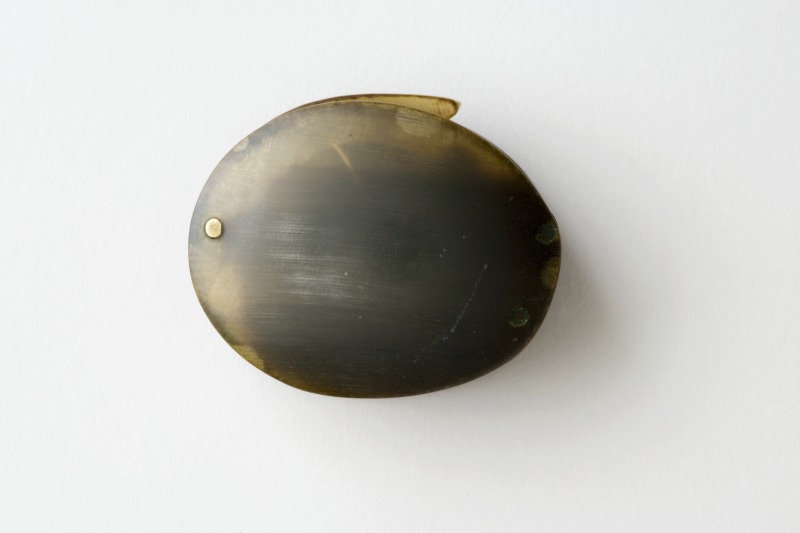
Small magnifying glass, given to astronomer William Bayly by Captain James Cook on his third voyage
View this record on the National Museum of Australia's website
Sign in to save favourites.
- Type
- Magnifying glasses
- Place
- California, United States of America; Australia; Tahiti; New Zealand; Canada; Alaska, United States of America; Hawaii, United States of America
- Materials
- Brass, Glass, Tortoiseshell
- Collection
- Captain Cook Magnifier collection
- Accession number
- 2006.0088.0001.001
Description
A circular magnifying hand-lens mounted in an oval, mottled-green tortoise shell frame. The lens frame swings outwards on a tiny brass axle pin from between two oval mottled-green tortoise shell covers.
About the collection
The Captain Cook Magnifier collection consists of a tortoiseshell-framed folding pocket magnifier and a silver reliquary, in the shape of a capstan, in which it is housed. The tortoiseshell frame around the magnifier lens is broken at one point, but the lens is in good condition. The silver reliquary is also in good condition. Captain Cook's voyages of discovery between 1768 and his death in 1779 produced accurate maps, extensive collections of natural history specimens and ethnographic objects, and major advances in navigation which revolutionised European understanding of the Pacific and laid the path for British colonisation of Australia and New Zealand. The magnifier is an excellent example of the passion for Cook relics which begins with the sale of his effects before HMS 'Resolution's' mast in 1779 and continues to the present day. The magnifier served as a treasured memento of his captain for William Bayly, astronomer on Cook's second and third voyages, and was valued for its associations with both Cook and Bayly by its subsequent recipient and his family.
Read live from the Museum's Collection API (12/11/2026, 5:45:13 am). Record last updated by the Museum 2023-12-04. Licence: https://creativecommons.org/licenses/by-nc/4.0/.