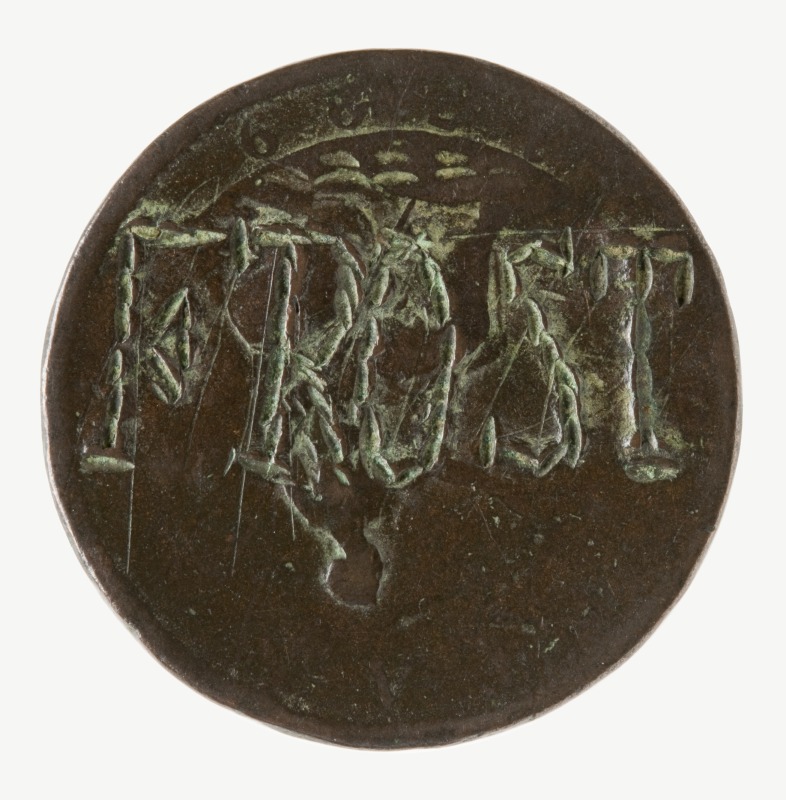
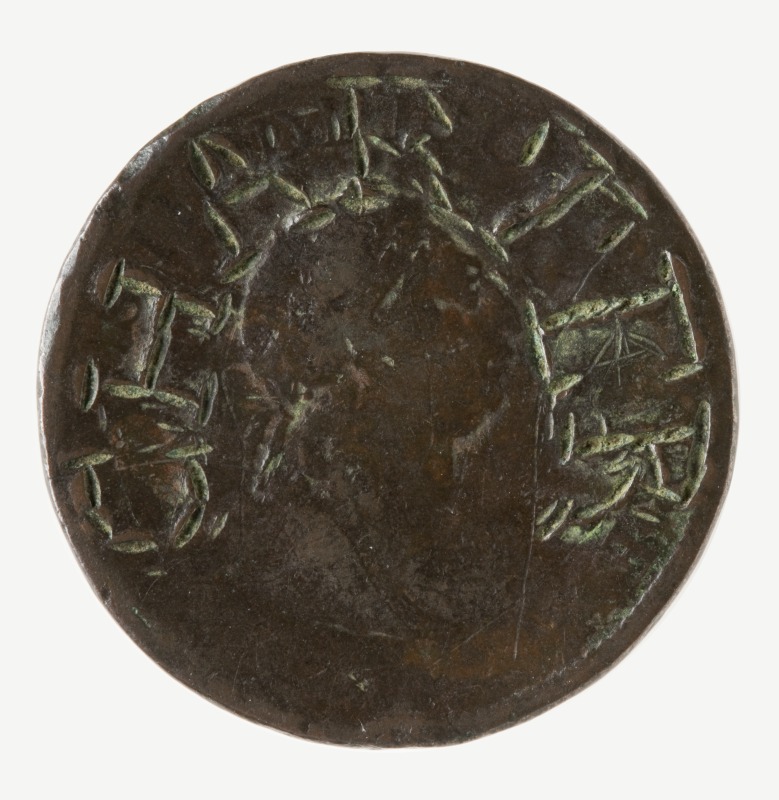
Convict love token engraved with the name Frost
View this record on the National Museum of Australia's website
Sign in to save favourites.
- Type
- Convict love tokens
- Materials
- Metal - non specific
- Collection
- Timothy Millett collection
- Accession number
- 2008.0039.0209
Description
A convict love token made up of a coin engraved on both sides. One side features the text 'CHARTER' around the edge of the coin. The other side features the text 'FROST'. The designs from the original coin are still visible.
This token, (together with a token engraved with the name 'Fox Maule' and one protesting the detention of the 'Welsh martyrs'), relates to the Chartist, John Frost. The production of these tokens demonstrates that tokens were sometimes made for reasons other than as romantic keepsakes. In this instance the tokens commemorate political events or movements. Frost was a prosperous woollen draper and former mayor of Newport, Monmouthshire, who became a notable figure in the Chartist movement, a working class movement seeking political reform in Britain. Frost attended the first Chartist convention in London in February 1839 at which a number of the leaders of the movement were arrested for sedition. He returned to Monmouthshire where he planned and led an armed attack on Newport. The attack was a dismal failure. About 20 people were shot dead, and 125 were arrested. Frost and two of his co-leaders were originally sentenced to be hung, drawn and quartered, but after intense public pressure their terms were commuted to transportation for life. Fox Maule, Second Baron Panmure (1801-1874) was Under Secretary of State at this time. Frost sailed for Van Diemen's Land (Tasmania) on board the Mandarin, reaching Hobart on 30 June 1840. He worked as a clerk in the commandant's office at Port Arthur before going on to become a schoolmaster. On receiving a conditional discharge in 1854, he left for New York and eventually returned with a free pardon to England, where he wrote and lectured on the horrors of convict life. He died at Stapleton, near Bristol, on 27 July 1877.
About the collection
The Timothy Millett collection comprises 307 convict love tokens dating from 1762 to 1856, and seven contemporary documents relating to the criminal justice system including: recommendations to commute the death sentences of Hester Sampson and Thomas Hayes to life transportation; a calendar of prisoners awaiting trial in the goals of Durham, Newcastle and Northumberland; a request to the Middlesex assizes for rewards to be paid; a printed copy of George Skene's last speech prior to execution; a printed broadside listing prisoners in Dorchester jail awaiting transportation; and a 60 page handwritten account of the life of Thomas Jones, who was transported twice and finally hanged at Winchester Prison in 1856. Convict love tokens, typically made from smoothed-down coins and engraved or stippled with a message, derive from traditional sailors' farewells. The production of these 'leaden hearts' rose as criminal indictments increased in Britain, with the majority produced during the 1820s and 1830s. As mementos made by or for convicts facing transportation (or death) to leave behind for their loved ones, the tokens provide a poignant, personal insight into the transportation system.
Read live from the Museum's Collection API (12/11/2026, 6:14:15 am). Record last updated by the Museum 2026-08-10. Licence: https://creativecommons.org/licenses/by-nc/4.0/.