Radiosonde telemetry equipment used with weather balloon to measure atmospheric parameters
View this record on the National Museum of Australia's website
Sign in to save favourites.
- Type
- Meteorological equipment
- Place
- Wilkes Station, Wilkes Land, Antarctica; Antarctica
- Materials
- Adhesive tape, Cardboard, Ink, Metal - non specific, Plastic, Textile - non specific
- Collection
- National Antarctic Heritage collection
- Accession number
- 2024.0001.0017
Description
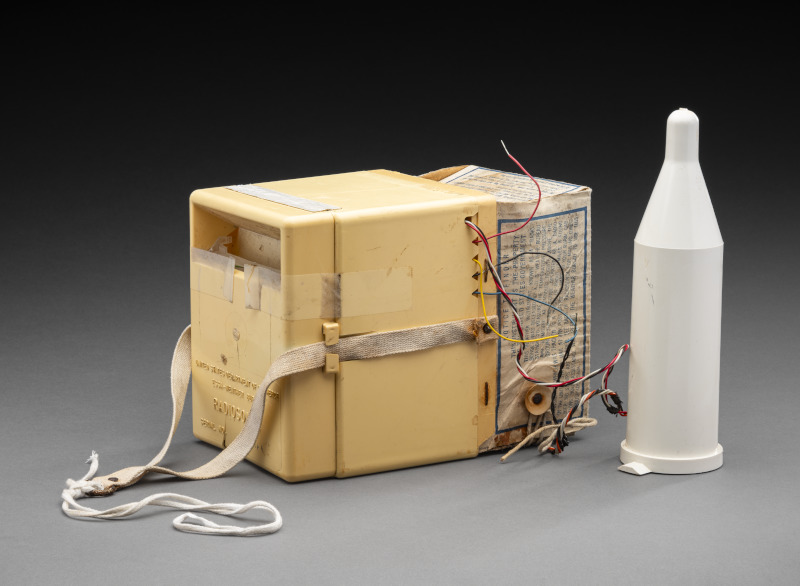
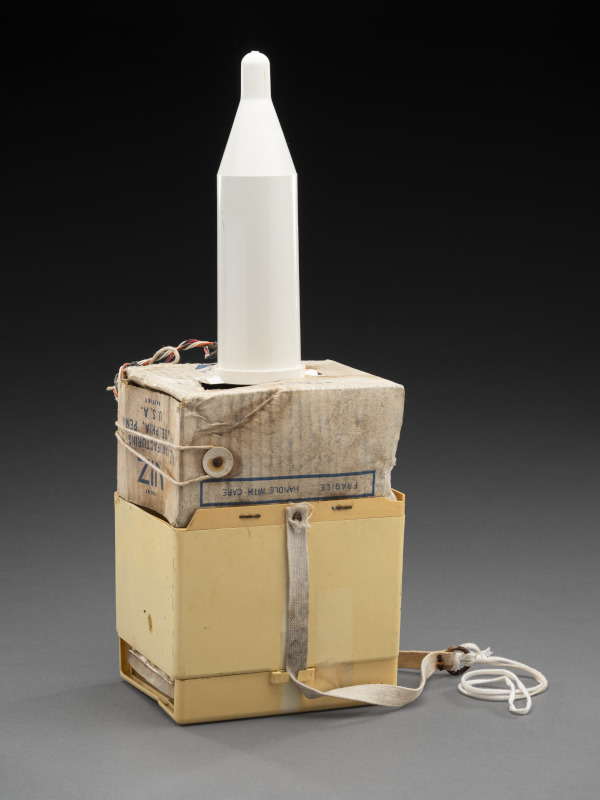
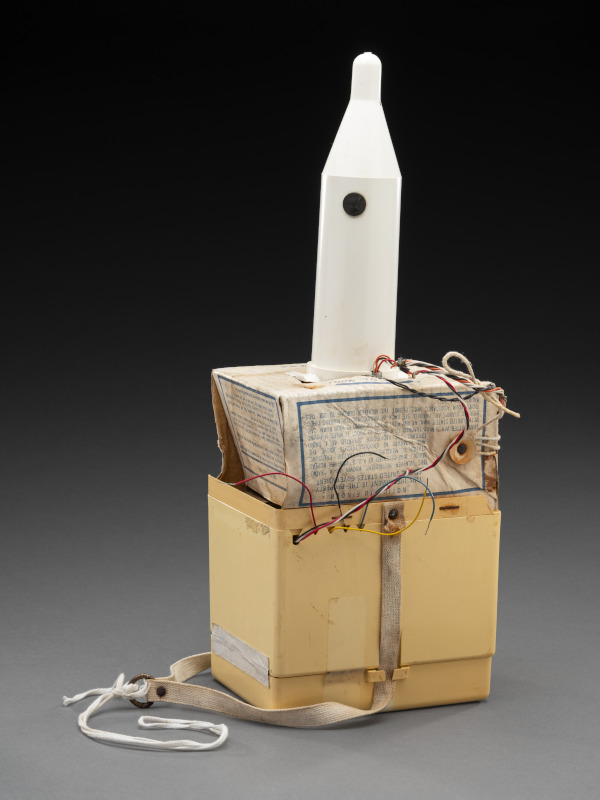
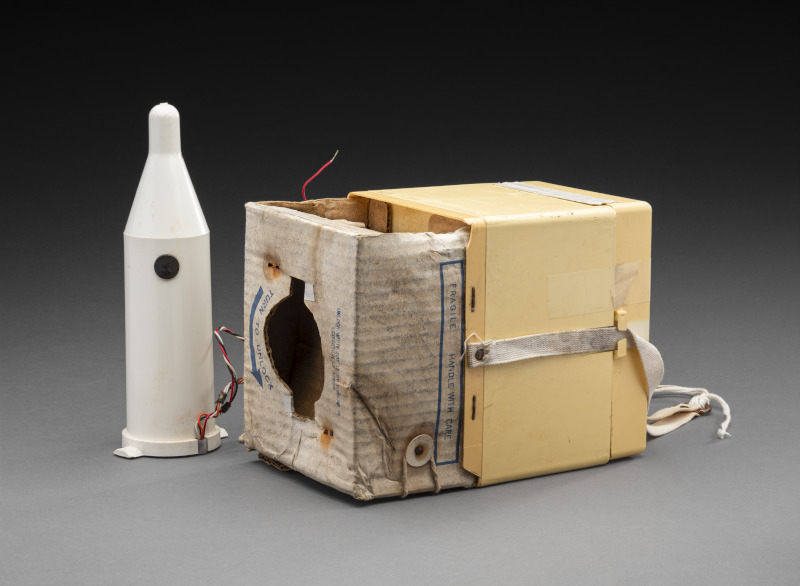
A radiosonde unit consisting of a cream plastic box with a carboard platform and a white plastic bottle. The bottle is attached to the box with red, white and black wires. Nailed to the box is a cream fabric strap. The cardboard platform features blue printing that reads 'FRONT / VIZ / VIZ MANUFACTURING CO. ...', 'MAILING DIRECTIONS ...', 'FRAGILE HANDLE WITH CARE', and 'NOTICE TO FINDER ...'.
This is part of a radiosonde unit. Radiosonde are battery-powered telemetry intstruments usually carried on weather balloons. Radionsondes can measure altitude, pressure, temperature, relative humidity, wind, cosmic ray and geographical postiion. They are essential in meteorology. This radiosonde unit was used for weather observation in Antarctica.The term comes from the German: radio - relating to braodcasting, and sonde - for probe.
About the collection
This collection comprises approximately 600 objects acquired by the Australian Antarctic Division and its predecessors between the 1940s and 2010s. It includes scientific and communication equipment, navigation and cartographic equipment, specimens, commemorative objects, building fabric, field support vehicles, clothing and field work supplies relating to Australia’s long and distinguished tradition of research and exploration within the Antarctic region. These objects are the largest and most diverse assemblage of surviving material culture demonstrating Australia’s relationship with the subantarctic islands and Antarctic continent between the nineteenth and twenty-first centuries. The collection offers remarkable natural and historical significance, notably nineteenth century commercial activities and the early twentieth century expeditions of Sir Douglas Mawson and other explorers that expanded scientific knowledge and laid the foundation for Australia’s enduring presence in the region. From the 1940s, the Australian National Antarctic Research Expeditions undertook major exploratory and scientific work to understand and protect the Antarctic landscape. Australia took a leading role in the International Geophysical Year and the negotiation of a comprehensive environmental protection regime for Antarctica with the establishment of the Antarctic Treaty System from 1959. It records how the Australian Antarctic Division continues to manage Australia’s interests in the Antarctic region, overseeing world-leading research at three permanent continental research stations - Mawson, Casey and Davis - and at subantarctic Macquarie Island.
Read live from the Museum's Collection API (12/11/2026, 5:23:30 am). Record last updated by the Museum 2026-10-12. Licence: https://creativecommons.org/licenses/by-nc/4.0/.